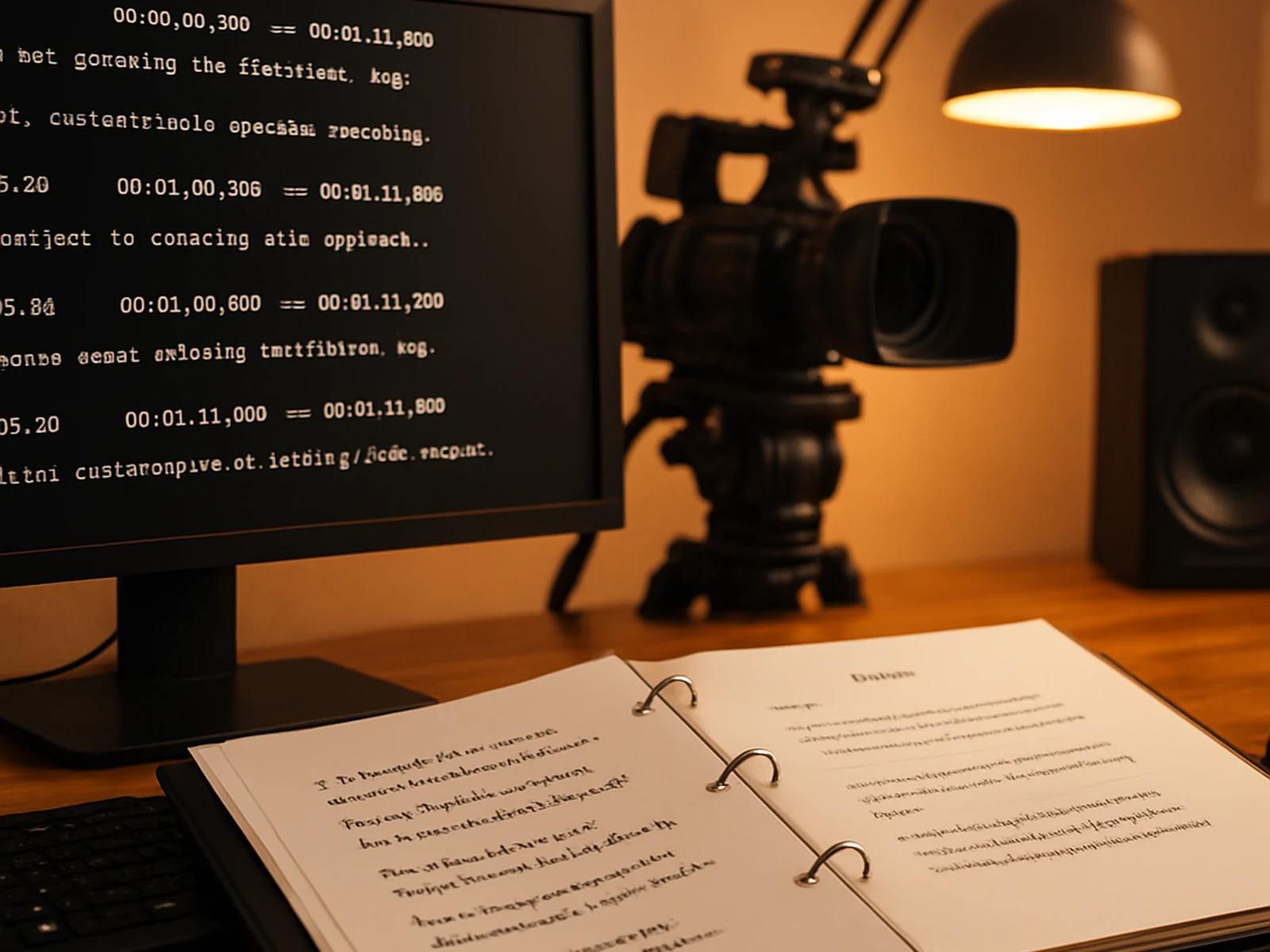
Audiovisual translation requires a different skill set from document translation. The output is constrained by timing: subtitles have to fit within a specific on-screen window, display for a duration linked to the spoken audio, and be readable by a viewer at normal watching speed. Breaking those constraints produces subtitles that nobody can actually follow.
We produce subtitles, SDH captions (for the deaf and hard-of-hearing), and dubbing scripts. For dubbing, we work with mouth movement considerations and syllable counts where applicable. Voice-over translation for corporate video and documentary is handled with attention to the visual pacing of the content.
Our subtitling workflow uses industry-standard timing guidelines: maximum character counts per line, minimum display durations, maximum reading speeds (typically 17 characters per second for broadcast), and appropriate handling of speaker changes and on-screen text.
We deliver in all standard formats: SRT, VTT, SCC, STL, TTML, and format-specific outputs for Netflix, Amazon, YouTube, and other distribution platforms. If your platform has specific subtitle formatting requirements, we work to those specifications.
For e-learning specifically, we handle subtitle files, narration scripts, on-screen text labels, and quiz content translation. E-learning content often requires cultural adaptation beyond translation -- jokes, examples, and scenarios that work in one market may need reworking for another.
- Subtitling (SDH and standard) in all formats
- Dubbing and voice-over scripts
- Closed captioning to broadcast standards
- E-learning narration and subtitle files
- Platform-specific formatting (Netflix, YouTube, Amazon)
- SRT, VTT, STL, TTML, SCC delivery
- Cultural adaptation for regional markets
- Timing and readability review included